Sunday, May 1, 2016


The Redskins name debate has became an increasingly pervasive topic, especially in this age of political correctness. Those opposed to the name cry that it misrepresents Native American people, fencing them into being a one-dimensional ethnic stereotype. However, it should be noted that the Redskins' name is strikingly similar to other sports teams' names, including the Cowboys, Vikings and Cavaliers. All refer predominantly to a single ethnicity and can be interpreted as violent - ax swinging pillagers, referring to Vikings, and bow and arrow wielding savages, referring to Redskins. However, the controversy that surrounds the Redskins is nonexistent towards the Vikings- the general public simply doesn't view the term "Vikings" as an ethnic stereotype while it does Redskins. Thus, the desire to change the Redskins' name is attributed to political correctness. Simply because Native Americans are a minority group, people, with undoubtedly good intentions, seek to eliminate sources of Native American stereotypes while leaving Caucasian stereotypes untouched. Consequently, the desire to use "politically correct language" creates "messy moral dilemmas" (Kakutani): by singling out a source of Native American stereotypes while ignoring one of Caucasian stereotypes, opponents of the Redskins' name further separate Native Americans from their Caucasian counterparts, a form of racism called micro aggression. Thus, an action intended to reduce racism results in compounding it.

The Washington football team was originally named the "Braves" but changed to the Redskins to honor William "Lone Star" Dietz a player and coach who was of Sioux descent. Hence, the original purpose of the name change was to enshrine a legend of the game. The name Redskins, thus, acts as a source of pride for Native Americans and does not imply that Native Americans are violent. Rather, it is a positively connotated nickname, intended to inspire feelings of comradery, strength, and pride. Now, as "[language is] a means of saving face" (Pinker) rather than a channel for expression, the word protrudes as offensive and rude, contrary to today's culture of political correctness. Because of this, the true purpose behind "Redskins" is lost. By changing the name, opponents of "Redskins" will desecrate an attempt to honor Native Americans, failing their original purpose to eliminate racism.


Sunday, April 17, 2016


Today, freedom is often glorified as a defining characteristic of modern society. Many, when putting forward an unpopular opinion, offensive or not, commonly cite their natural freedom of speech allows them to do so. However, society's obsession with freedom is based on a natural desire to be comfortable rather than to truly be free.

This concept, at first, appears to be false: America was based off the desire for freedom of religion and has carried the ideals of freedom of expression into present day. Though under closer inspection, Mencken's statement holds true. Upon arriving to the Americas, the pilgrims traded and respected the American Indians out of necessity. As time went on, however, and the new Americans became accustomed to their new surroundings, the American Indians quickly became a nuisance rather than an aid. Had the Americans themselves truly wanted to be free rather than simply safe, they would've respected the American Indians' own desire for freedom; rather, once the Americans viewed the American Indians as a threat to their relatively comfortable lifestyle, the Indians were altogether forced out of society and excluded from the Americans' "freedom".

The subconscious emphasis of comfort over freedom is even more evident in today's culture. Throughout history, education has been regarded by the most brilliant of minds as a prerequisite to freedom: "only the educated are free" (Epictetus), "Freedom can only exist in the society of knowledge. Without learning, men are incapable of knowing their own rights" (Benjamin Rush). As shown, without education, no man is free. However, today's youth largely rejects intense education. A short scroll down Twitter or Facebook on a Sunday night reflects this as true - the number of people posting "Why is there so much homework to do" or "Why school when I can be a stripper" is overwhelming considering the results of education. Many are simply unwilling to rigorously work towards freedom. Thus comfort reigns over freedom: today's society would rather be safe, comfortable, and restricted, than be stressed, worried, but free.  

Sunday, March 27, 2016

Parallelism

Alexie in "Indian Education" makes use of obvious parallelism throughout his piece, acting to emphasize the racism that American Indians are forced to endure. In first grade, Alexie lists the numerous names that him and another Indian boy who were "tortured" were given, including "Junior-Falls-Down... Bloody Nose... Steal-His-Lunch... Cries-Like-A-White-Boy... top-yogh-yaught". These all consist of grammatically similar names, commonly associated with traditionally Indian names. Thus, the Indian bullies, by fabricating traditionally Indian names, mock the culture that both they and Victor share. Such a seemingly stupid action reflects the underlying racism that these bullies, even at such a young age, are subject to - the racism that they feel is so extreme that they begin to deflect it onto their own peers.

A similar situation occurs again in Sixth Grade, when Stevie Flett "called [Randy] out, called him a squawman, called him a pussy, and called him a punk. By describing this event with parallelism, Alexie reveals the extent of the racism - that experiences like these are not uncommon within American Indian circles. Instead, such experiences can be rattled off rather nonchalantly - a normal everyday event.

The most pervasive usage of parallelism is when Alexie describes the "bulimic" girls at his new school, writing that "I sat back and watched them grow skinny from self-pity", and then continues to write that his own family "ate [canned beef] day after day and grew skinny from self-pity". Consequently, Alexie emphasizes how the final outcome of the actions of both the privileged white girls and his own family is the same - they both end up growing "skinny from self-pity". However, while the white girls grow skinny from an abundance of food, Alexie and his family grow skinny from the lack of it. Thus, Alexie exposes how the Native Americans are starved in ways other than the simple lack of food: love, opportunity, and equality.

Sunday, March 20, 2016

Flint


 This cartoon depicts the current Michigan governor, Rick Snyder, forcing a small child, representing Flint, into some murky, rust colored water. Snyder, in a text bubble, says "I poison you in the name of deregulated trickle-down government", referring to trickle-down economics, which state that, by imposing tax cuts on the rich, the rich will pour their excess dollars into their own businesses, creating jobs and investment around the country. However, by implementing this policy, the government is forced to reduce their tax revenue, and thus cut spending. Because of this cut in spending, it is likely that Snyder decided against pouring money into Flint to resolve the crisis. Consequently, this cartoon's main purpose is to criticize both the Republican party and Snyder for placing priority on their political beliefs over the health of the people they serve.

In the background, a republican elephant is drawn standing happily on dry land, responding "A-MEN" to Snyder's text bubble and holding a thick black book with a single money sign drawn on it. Along with "A-MEN", the book can be construed as a bible and the elephant a pastor. Thus, Republican policy in general, represented by the elephant, can be interpreted as a policy worshiping money and in control of those who ascribe to it, just as a pastor is. This idea is supported by the facial expression and body posture of Snyder, who appears to be robotic and stiff, suggesting that he is being controlled by an outside force. Furthermore, by drawing the elephant as fat, content, and standing on dry land, the artist implies that the republicans, or those who support trickle down policies, haven't experienced the struggles of the poor; instead they live contently their entire lives and consequently underestimate the terrible conditions that those in poverty live in. 

Sunday, March 13, 2016


The anecdotes Raymo utilizes to convey his warning of the dangers of excessive scientific pursuits all have a certain verisimilitude that closer connects the common reader with the stories. Raymo begins his piece with an anecdote about "two unemployed men in search of a fast buck", as most young men are. Thus, the piece is read with a "this could happen the characters in the anecdote could be any common person. The "two unemployed young men" even quickly sell off the "stainless steel cylinder" to a "junk dealer", rather than a professional, seeking quick cash as most people do. Furthermore, Raymo writes a rather scientific based anecdote in the absence of any true scientific jargon, writing that the cesium atoms were "seemingly magical", describing it as a "glowing dust... like an enchanted sprite", rather than describing them as, for example, "a beta-decaying isotope of cesium, cesium-137". This allows the reader to feel as if the anecdote is specifically written for him/her rather than for a distant researcher.

Raymo's story about Marie Curie also acts to relate to the reader of the passage. Marie Curie was a renowned physicist who was the first women to win the Nobel Prize and the first person and only women to win it twice. However, in Raymo's anecdote, she is reduced to a common mother, "sitting at the bedside of her four-year-old daughter", rather than one of the most important physicists in modern history. Thus, Raymo emphasizes how anyone, such as two young men and a mother, can experience discovering such radioactive materials and warns the general public on the dangers of the "unexamined quest for knowledge".


Sunday, March 6, 2016


As someone mentioned in class this week, "The Death of the Moth" develops according to the life cycle, consisting of an energetic beginning, struggling conflict, and finally relaxed death. This concept is reflected in Woolf's changing rhetoric throughout the piece. The first two or three paragraphs especially contain vivid, imagery laden sentences that convey the vitality of life. Woolf describes her surroundings as "gleam[ing] with moisture" and the net of rocks as having "the utmost clamor and vociferation, as though to be thrown into the air and settle slowly down upon the tree tops were a tremendously exciting experience", The simple fact that Woolf describes inanimate rocks as having life displays the natural energy that all objects in the world originally have; furthermore, this sentence is laden with imagery that reflects the complexity and liveliness of life. Woolf describes the rocks as being "vociferat[e]" and the Earth as "gleam[ing] with moisture", thus illustrating the complexities of life. Hereafter, as the essay progresses into a discussion about death, Woolf shortens her sentences and ceases to describe her surrounding with such vivid adjectives: she instead narrates her situation as simply as possible, writing "The legs agitated themselves once more... I looked out of doors. What had happened here... work in the fields had stopped". Consequently, Woolf, "hot with humility", suggests the simplicity of death, similar to the tranquility associated with both Gandhi and haikus, illustrating to everyone today of the fleeting nature of life and the finality of death. 


Sunday, February 28, 2016

Throughout "A Modest Proposal", Jonathan Swift obviously utilizes biting satire to illustrate the English as "savages" for forcing the Irish into their terrible conditions. At the time of the writing, Ireland was completely dominated by England and was essentially a "conquered territory". Similar to their treatment of the Americans, the English withheld the right to vote, buy land, or receive an education from the Irish, and thus pushed the Irish to resent the English and eventually begin a revolution. In his essay, Swift mentions that the Americans under English control consume "schoolboys", and thus, like the Irish, are savages. Similarly, Swift writes that "a native from the island Formosa" told him that "the carcass [of a human]... [is] a prime dainty", painting the people of Formosa as savages. However, because the Formosans were not under the English's control and actually were known for consuming small children, while the Americans and Irish were comparatively civilized, Swift can be interpreted as saying that the English's forceful rule will eventually drive both the Americans and Irish into states of savagery. Consequently, Swift portrays the English as the true "savages", pushing the two territories they control into poverty and starvation.


Swift similarly uses a paradox to emphasize the English as the real savages, writing that "Those who are more thrifty may flay the carcass; the skin of which artificially dressed will make admirable gloves for ladies, and summer boots for fine gentlemen". By juxtaposing "carcass" and "admirable gloves... fine gentlemen", Swift brings out the negative qualities of the English. As those who were regarded as "ladies" and "fine gentlemen" during this period were the English, Swift associates the obviously uncivilized "carcass... skin" with the supposedly civilized English, thus criticizing the English for creating the conditions that the Irish are forced to live in. Furthermore, when Swift suggests that the English would wear the carcass on their "gloves [and]... boots" indicates that, to the English, the Ireland is nothing more than a decoration or accessory to their nation, rather than an integral part of it.

Sunday, February 21, 2016


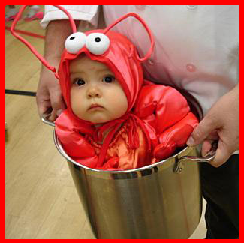
Wallace, in the early stages of the piece, mainly develops his ethos by simply describing the area and the festival itself, illustrating the festival as "joyful and lucrative and loud" with "attendance over 100,000". He even notices the "free pamphlets with recipes, eating tips, and Lobster Fun Facts", proving his knowledge of everything involving the festival. In the next few paragraphs, Wallace goes on to explain the entomology and eating history of the lobster to his audience of high class eaters, again proving his validity and understanding of the topic over his already knowledgeable audience. Later, Wallace writes that he isn't "trying to give... a PETA-like screed here", separating himself from a group that most likely isn't supported by the readers of the essay. Thus, he establishes himself as a neutral speaker who can, and should, be trusted.

Wallace's use of ethos eventually allows his use of logos to further strengthen his argument. By successfully establishing himself as a voice to be trusted, Wallace is able to lead a scientific discussion about the human and lobster "cerebral complex", and eventually disprove the Main Lobster Promotion Council's claim that lobsters have "no cerebral cortex, which in humans is the area of the brain that gives the experience of pain." Wallace also utilizes deductive reasoning to argue how the consumption of lobster is unethical. He begins with the general statement that "the... criterion [if an animal is in pain] is whether the animal demonstrates behavior associated with pain", and then smugly points out how "it takes a lot of intellectual gymnastics... not to see struggling [and] thrashing... as just such pain-behavior."

Much of Wallace's argument ultimately relies on pathos, relating the lobster's pain to a human's. He vividly describes "ways to kill your lobster", including "driv[ing] a sharp heavy knife point-first into... the midpoint between the lobster's eyestalks", then relates this to the third eye on a human's body, forcing the readers to visualize such a violent action on a human rather than a lobster. Throughout the piece, also, Wallace repeatedly personifies the lobster, reporting that the lobster "cling[s]" to the container, "like a person trying to keep from going over the edge of a roof". By describing the lobster as an emotional, aware being, Wallace is able to disprove the argument that "lobsters' brains [can't feel]", successfully questioning the ethics of consuming lobsters.


Sunday, February 14, 2016

In "Just Walk on By: Black Men and Public Space", Staples utilizes numerous paradoxes to both support his argument and invoke thought in the reader. One such paradox is "accustomed to but never comfortable". Staples, by writing this, illustrates the difficulties that African Americans, like Staples, are forced to live with. Most people are able to interchange the phrases "accustomed to" and "comfortable [with]", however Staples draws a strict line between the two. By separating the two above phrases with "never", Staples emphasizes how his life is completely different from the life that most people live. Furthermore, Staples  could've wrote the phrase "but never comfortable" as a non-essential phrase - a phrase that can be taken out of the sentence entirely. However, he decides to include it as an essential phrase, reflecting how the situation that Staples is trapped within is universal for all like him. It is impossible to escape such racism, rather, it is a fact of life as is food and water.

The last sentence of the piece also acts as a paradox. The reference Staples makes refers to how hikers who hike in dangerous areas commonly wear bells to safely warn bears of their presence. By comparing his whistling to the hikers' bells, he implies that he is required to act careful around "bear country", or white society, and that he does this to ensure his own safety. However, unlike the hikers, Staples constantly lives in his own "bear country" and is thus required to always wear his figurative "cowbell" to stay safe from his "predators", or white society.

Sunday, February 7, 2016

Form Meets Content


Ms. Valentino mentioned the idea of "form meets content" several times over the last few weeks and "Shooting Dad" appears to contain many instances in which the sentence structure and diction of the piece matches its content.

One of Vowell's purposes is to illustrate how truly similar she and her father are despite their differences in opinions regarding politics, guns, etc. As she describes her and her father's differences in the first half of the piece, the sentence structure seems to foreshadow her eventual realization that she and her father are more alike than she thinks. Vowell says "All he ever cared about were guns. All I ever cared about was art." The parallelism and repetition of the phrase "All he/I ever cared about" hints at their similarities. Despite the slight difference between the sentences at the end, guns vs. art, the majority of both sentences are the same. This indicates that both Vowell and her father are largely the same - both have an intense passion for their respective arts. The only difference between the two is what they're passionate about. Vowell later describes a similar situation when she writes "available flat surfaces were buried under a million scraps... available flat surfaces were buried under piles of staff paper". Again, Vowell repeats the beginning phrase, "available flat surfaces were buried under...", and leaves the end of the sentence to describe their differences. This parallelism and repetition serves to emphasize their likeness - like the sentence structure, the father-daughter pair parallel much of each other. The fact that their differences are forced to the end of these sentences reflect how their disagreements are relatively insignificant

Sunday, January 31, 2016


In "Champion of the World", there are many instances in which it seems that the group of African-Americans willingly conform to the identity forced upon them by white society. Joe Louis, the savior himself, is given the nickname "Brown Bomber". This nickname, as innocent as it seems, defines Joe Louis by his skin color, and combined with the negative stereotypes associated with blacks at the time, forces Louis to act a certain way. Louis's fighting style is even described as "mad", a stereotype attached to African-Americans. Louis's nickname contrasts with his opponent's, who is unnamed throughout the chapter. This can be interpreted as an example of how blacks were restricted by their skin color and forced to fit a certain mold, while whites were allowed to find their own identity. Despite the obvious negatives of the nickname, the group at the Store willingly address Joe Louis as the "Brown Bomber".

Furthermore, the group's diction enforces the negative stereotypes that they're fighting against. Before the fight, someone says, "Joe's gonna whip that cracker like it's open season." As open season is defined as "a period when hunting restrictions... are lifted", this person insinuates that Joe will beat the white contender as if Joe's a hunter and the contender prey, rather than both as human competitors. This serves to enforce the stereotype that African Americans are savages and "only a little higher than apes." This stereotype is again furthered when the narrator states that "if the Brown Bomber's victory was a particularly bloody one they would order peanut patties." By suggesting that the group would celebrate more if the victory was "particularly bloody", the narrator again enforces the stereotype that her own race is uncivilized, a "lower [type] of human [being]".


Sunday, December 13, 2015

Religion and God

In The Diamond as Big as the Ritz, religion is portrayed as an ideal that has completely lost its appeal and is dominated by dreams of wealth and class. The small village of Fish alludes to the Bible and Christianity in many ways, including the 12 "disciples" that inhabit the village and their near worship of the train that passes their village. Thus, the village of Fish can represent traditional Christianity or religion. However, Fish is small, barren, and abandoned - similar to a ghost town. The Washington estate is the exact opposite - extravagant, large, and always occupied. The fact that the Washington estate was built up by selfishness and greed and at the same time is more successful than Fish indicates that traditional religion has been cast off in favor of a new "religion" - the worship of wealth and materialism.

This is further illustrated by the symbolism inside the Washington estate. Braddock holds prisoners in a small chamber dug underneath the ground. These prisoners attempt to persuade John to let them free or join them in the prison, paralleling mythological greek demons from Hell that attempt to charm mortals to join them. Even at one point, a prisoner shouts "Come on down to Hell!". Thus, this underground chamber is Hell, while the Washington estate above represents Heaven. Furthermore, Braddock represents the new God of wealth and materialism that has overtaken the traditional Gods. He has complete power of anyone that enters his world, or his estate, shown by not only the prisoners, but his restrictive control over Kismine's actions and John's life. Furthermore, when Braddock attempts to bribe God with a large diamond, there is no response, suggesting that God no longer watches over the world. Braddock's worship of wealth and materialism causes God to abandon him, leading to his own demise.

Sunday, December 6, 2015


One of the best passages throughout the Great Gatsby in my opinion is in chapter three, when Nick describes Gatsby's smile for a full paragraph. Early on, Fitzgerald establishes Gatsby as an extremely persuasive and charismatic character, writing that Gatsby had "one of those rare smiles with a quality of eternal reassurance in it". This creates an expectation for Gatsby's persona as someone who is trustworthy and noble - a persona that is quickly broken down as Gatsby is exposed as a bootlegger. Furthermore, Fitzgerald utilizes numerous dashes when describing Gatsby's smile, writing "[Gatsby's smile] faced - or seemed to face - the whole eternal world for an instant". The dashes set off reality - "faced" -  with illusion - "seemed to face". Again, Fitzgerald hints at the uncertainty of Gatsby's past and the numerous lies he creates to reach a relatively mundane goal.

Gatsby's smile also reveals that he doesn't see an entire situation clearly, only noticing what he wants to see. Fitzgerald writes: "[The smile] understood you just as far as you wanted to be understood, believed in you as you would like to believe in yourself, and assured you that it had precisely the imperssion of you that, at your best, you hoped to convey." Gatsby is shown as such a strong optimist to the extent that it begins to hurt him. His optimism forces him to constantly attempt to relive the past. He believes that simply because he loved Daisy five years ago, she would simply return the love when he returns. Furthermore his optimism causes him to fail to register that Daisy is married and has a child, driving him to pursue a dream that is already dead.

Saturday, November 28, 2015

Illusions vs Reality and Gatsby's Books

As discussed in class, the Valley of Ash represents many things, such as a place of absolute poverty, hopelessness, and sin. It is also interesting how the Valley of Ash is placed in between New York, a place where Gatsby seems to be the most successful, dreaming up several glamorous plans, such as meeting Daisy for the first time in years, and the West Egg, Gatsby's home where he forces himself to constantly remind himself of his reality without Daisy. Thus, New York represents a place of dreams and illusions, while the West Egg represents a constant reminder of reality. The Valley of Ashes represents the middle ground that exists between illusions and reality, foreshadowing the illusions that Gatsby creates about his own past. The eyes of Dr. TJ Eckleburg on the billboard are first described to the reader in a manner in which it is not clear that the eyes do not actually belong to a person. Fitzgerald creates an illusion for the reader, describing the eyes as "gigantic" and "looming" without referencing the billboard for more than three sentences, causing readers to create their own image of these strange eyes. However, Fitzgerald quickly returns to reality by writing that the eyes are on a billboard. These eyes act to foreshadow the illusions that, like Fitzgerald, Gatsby creates himself over a long period of time and will suddenly fall apart.

Gatsby's own books in the West Ham also indicate the lies that he created about himself. Owl-Eyes says that Gatsby "didn't cut the pages", suggesting that the multitude of books in his library are for show only - Gatsby doesn't have any intention of actually reading the books. Furthermore, the books are held in a "high Gothic library, paneled with carved English Oak", showing Gatsby's aristocratic background. However, Gatsby may not actually be from such an aristocratic background, suggesting that Gatsby's self-made foundation, like the Gothic library and the books inside, may simply be a large sham.


Sunday, November 22, 2015

The History Teacher

In class, many people believed that the teacher was a good teacher in the sense that he truly cares about the children. He strives to give them what he thinks is a quality education that will preserve their innocence. However, I don't believe that he truly cares about the children. He seems to go through the motions of being a teacher, and then returns home not caring about the children themselves, but whether they receive the lies that he tells. The language throughout the poem is relatively lax and simple, similar to an everyday conversation language, reflecting the attitude of the teacher himself. His general attitude towards the students' future is one of indifference and apathy. Furthermore, the poem doesn't rhyme and lacks a complex rhythm, giving the poem a feel of simplicity, again reflecting the teachers indifference towards his students' education. The teacher "walk[ing] home past flower beds and white picket fences" also stresses the teacher's apathy towards not only the students, but his own life. The symbol of a man returning home after work paired along with the symbol of the average american lifestyle - the white picket fence and flowers - represents the teacher's own lack of career ambition and passion in his own life. He is perfectly content with his life and doesn't have a reason to properly educate his class. It seems that this history teacher embodies the average American. Someone who works the normal 9-5 job, and returns home thinking about trivial things, such as wondering "if they would believe that soldiers in the Boer War told long, rambling stories" instead of thinking about how to better themselves.

Sunday, November 15, 2015

Pauline's Tooth

Morrison writes about Pauline's tooth in order to describe how society is so easily poisoned and destroyed by racism. As the "brown speck" first forms, it is small and insignificant, "easily mistaken for food", paralleling racism which was first mistaken as a positive to society, like the speck. However, the racism and slavery cut deep wounds into society's morals, doing so slowly and carefully so that society didn't truly realize the overpowering negative impacts that racism had. Over time, racism simply became an accepted way of life for both the blacks and whites, and eventually, the suppressed fought back against the racism, "leaving a ragged stump behind". As stumps are commonly associated with trees and life, the stump left behind was supposed to grow back and create a new, healthy tooth, representing the birth of a society with new morals. However, the damage already done by racism was debilitating and the tooth wasn't able to grow back. Morrison also writes that "there must have been the conditions... that would allow [the speck] to exist in the first place". In this final sentence, Morrison pins the blame of racism and the eventual destruction of society on society itself, describing society as the enabler that brings its own downfall.

Later, Pauline again has a tooth pulled out, this time by a piece of candy she eats while watching a movie, again, representing society hurting itself. By eating candy, an obviously unhealthy food, she hurts herself and causes her tooth to fall out, dropping her self-esteem. This small change in her features causes a significant change in her lifestyle. Juxtaposed with the perfect Jean Harlow, Pauline is suddenly a broken women, unable to fit the mold of the ideal women, leading to her being constantly beat by her own husband. The image of the idealized women, in this case Jean Harlow, cast by the media forces women to match a certain framework. Any digression, however small, from the norm is unacceptable. Again, society harms itself through not only racism, but the objectification of women.


Sunday, November 8, 2015

Dandelions


Morrison in The Bluest Eye pins much of the self-esteem issues that Claudia has on society itself, including other African-American people and Claudia herself. When first noticing the dandelions, Claudia asks "why...do people call them weeds?" (41). At first, she feels sympathy for the dandelions, most likely because she relates to it; like Claudia, the dandelions are rejected for their lack of beauty. However, Claudia is unable to understand why the dandelions are ugly, and why their seemingly beautiful petals are rejected by most of society. In the same way, Claudia is unable to understand why she is apparently ugly. Believing beauty is a concrete object, Claudia even dismembers dolls to "find the beauty, the desirability that had escaped [her]" (20). After Mr. Yacobowski ridcules and treats her as a lesser being, however, she returns and say says "[the dandelions] are ugly... they are weeds" (43), almost if hypnotized and poisoned by Yacoboski, who, in reality, is the weed rather than the dandelions or Claudia.

The passage about the dandelion reveals much about Claudia and her own personality. She is very easily manipulated to believe what others believe due to her already low self-esteem. To Claudia, if others say the dandelion is ugly, it must be true. If others say she is ugly, it must be an unchangeble fact. This reveals Claudia's desire to be accepted by others around her. When describing Maureen Peal, Claudia says "She enchanted the entire school... She never had to search for anybody to eat with in the cafeteria" (62-63). Here, Claudia seems to be in a dreamy state, almost as if simply talking about Maureen would cause her to become accepted. Claudia views Maureen as a superior - someone so beautiful that she wouldn't associate herself with someone as ugly as Claudia, further pushing Claudia to question her own beauty.

Sunday, November 1, 2015

Plastic

Some seek to explain the social differences  between men and women through their respective childhood toys. Such analysis makes sense as it as a fact that many human characteristics are explained by experiences a child underwent during his/her childhood. However, when investigating the impact that Barbies have had on women, Prager seems to overlook many seemingly obvious facts.
Prager implies that men are at fault for the problems women face by asking, "Did Mr. Ryan design Barbie as a weapon?" The underlying message behind this statement seems to say that men, somehow, purposely designed the Barbie to suppress women from a young age, similar to Big Brother. However, it is obvious that this was not Ryan's purpose when designing the Barbie. Ryan does not use easily manipulated plastic for the body of Barbie to symbolism him molding women to a certain standard. He actually uses plastic because it was the most efficient and profitable substance to use for the Barbie at the time. In fact, Ryan must've used a moldable substance because a naturally solid substance that is impossible to mold doesn't exist. Thus, even if Ryan's purpose wasn't to suppress young children, the symbolism of the plastic is suspect at best. With this logic, every plastic object could be seen as an attempt to mold humans into a certain template, which certainly isn't true. 

Furthermore, Jack Ryan isn't even seen as the mastermind behind Barbie. Instead, Ruth Handler, a women, is largely credited for the invention of Barbie. This is even confirmed by a quick google search - a search of "barbie inventor" doesn't even mention Jack Ryan once in any articles, instead mentioning Ruth Handler as the inventor. Jack Ryan worked as the head of the research and development department and was in charge of some of the design of Barbie and the accessories that Barbie carried. He was not in charge of the main body of the Barbie, as Prager suggests. Moreover, because the Mattel Corporation created the Barbie, it would be near impossible for all men to create the Barbie. Instead, the collective effort of both men and women would be needed to create a product that created $944M in profit for Mattel in 2013. Thus, it is absolutely false that a women had no hand in designing Barbie, going against a large part of Prager's piece.

Sunday, October 25, 2015

The Last Page of Maus


In class I was suprised when we didn't really discuss the last page of the comic, as the last page of most literary works are very important in the context of the whole story. I thought this blog post would be a good opportunity to share my thoughts on the last page.


The ending of Maus fails to give closure, leaving numerous questions unanswered. The reason why Vladek calls Art Richieu is unknown and has many reasonable explanations. It could mean that Art hasn't lived up to the expectations that Richieu had left when he died, or that Vladek actually begins to accept Art as a son by allowing him to replace Richieu in his life. Alternatively, it could also mean that Vladek hasn't escaped the past and is still actively living in it. Or, most simply, it could just be a slip of tongue and indicate Vladek's advanced age and the memory loss he underwent.

The gravestone at the bottom of the page has the same effect. While it literally splits the last two panels, it also seems to wrap the whole story together, putting Vladek's and Anja's name next to each other, indicating that the couple "lived happy, happy ever after" (136). However, the conditions of death for both Vladek and Anja would seem to indicate an unhappy ending instead. This, perhaps, may be sending the message that the Holocaust never will have a "happy ending". Still, the tombstone adds to the confusion and lack of clarity presented by the last page.

The signature at the bottom of the page is a last word of sorts for Art Spiegelman. The fact that it is Art's signature rather than Vladek's implys that the story is now Art's, not Vladek's. Art has taken over the responsibility of the story and thus carries the guilt that comes with it. Alternatively, writing the story could also be a channel for Art to release his guilt, a catharsis of sorts. Even more, the date at next to Art's signature is 13 years, the age when a Jewish child to becomes a man. This suggests that Art finally became a man after writing the comic, as if writing this book ushered in a new and better age for Art.

The last page of Maus truly lacks the closure that so many other novels contain. Overall, the lack of closure suggests that, like this comic, the true stories of the Holocaust lack closure - nothing good came out of the Holocaust. The rare good from the Holocaust, under closer investigation, must have a larger negative that outweighs the positive.


Sunday, October 18, 2015

Memory

Many novels have various themes relating to memory and Maus and 1984 are two of them. In both novels, however, memory is represented in different ways, most notably as an abstract concept in 1984 and a concrete item in Maus. This difference allows each novel to fufill a different purpose. The fact that Winston Smith wasn't aware "Where that knowledge existed" (Orwell, 18) mirrors Orwell's warning to the public about technology: although technology didn't at that time allow for such propaganda to influence the public, it could quickly become possible. By reinforcing the idea that memory is actually abstract, Orwell convincingly conveys the message that the minds of humans are easily malleable by abstract methods.


Memory in Maus serves a different purpose. In Maus, memory is most often shown as concrete, taking the form of photos, numbers, and even the comic itself. The concreteness of memory in Maus, opposite to 1984, acts to create verisimilitude in order to emphasis the very real physical and emotional after effects of the Holocaust. When memory is displayed in the form of physical objects such as pictures, these memories are permanent, unable to be easily wiped from the mind. Vladek, for some reason, has a photo of himself in a prisoner suit "still now in my desk" (Spiegelman, 2.134). The physical picture acts as a stimulant to Vladek's memory, constantly reminding him of his trauma. In the same way, Maus is a constant reminder to the guilt Art feels due to the Holocaust.

In both novels, however, memory acts as a primary motavator for Winston Smith, Vladek, and Art. In 1984, Winston Smith's primarily goal is to restore proper memory to his people. In Maus, Art writes his comic to come to terms with his guilt by invoking his father's memory. Vladek's entire life revolves around his memory and trauma aquired from the holocaust. His memory forces him to be exceedingly miserly, eventually pulling him apart from his wife. Despite the difference in purpose, memory acts as a driving force behind both Maus and 1984's characters.